.png)
Healthcare Change Management: Why Most Technology Projects Fail (And How to Succeed)
- Dec 5, 2024
- 6 min read
Every year, NHS trusts and private hospitals invest millions in promising new technology systems; sterile processing tracking systems, advanced IT solutions in healthcare, modern decontamination equipment - only to watch projects collapse not from technical failures, but from human resistance.
The brutal truth? Technology doesn't fail. Change management does.
In healthcare environments where patient safety is non-negotiable and operational downtime can be life-threatening, failed change management isn't just expensive, it's dangerous. Yet most healthcare organisations approach technology implementation as if buying software automatically guarantees adoption.
GM61 Limited has spent over 10 years witnessing this pattern, particularly in the unforgiving world of sterile services where change management mistakes have immediate, visible consequences. Here's what we've learned about why healthcare change management succeeds or fails.

The Sterile Services Reality Check: Where Change Management Gets Tested
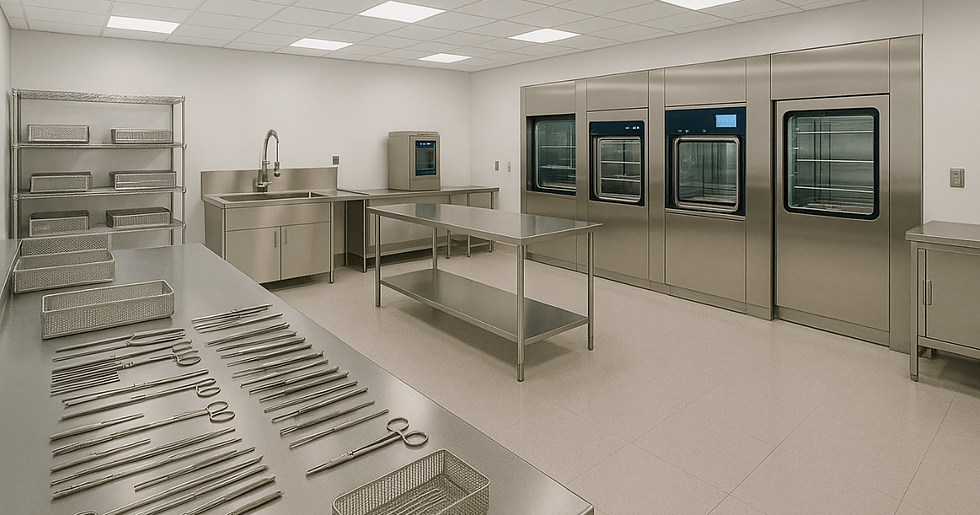
Central Sterile Supply Departments (CSSDs) represent the ultimate testing ground for change management strategies in healthcare. These departments can't afford gradual adoption curves or "learning periods" - surgical schedules depend on continuous instrument processing, and regulatory compliance is mandatory from day one.
When a hospital sterilisation and decontamination unit implements new tracking technology, the stakes couldn't be higher:
Surgery can't wait
Unlike other departments where new systems can be introduced gradually, sterile processing must maintain full operational capacity throughout any transition.
Compliance is binary
There's no "mostly compliant" in decontamination. HTM 01-01 standards don't offer grace periods for learning new systems.
Staff expertise is specialised
Sterile processing technicians have spent years mastering complex workflows. New technology that disrupts these proven processes faces immediate, justified resistance.
This is why GM61's expertise in sterile services change management has become our foundation for healthcare project management across all departments. If change management strategies work in CSSDs, they work everywhere.
What Change Management in Healthcare Actually Means
Most healthcare organisations confuse training with change management. They're not the same thing.
Training teaches people how to use new systems. Change management ensures people want to use them.
In healthcare settings, this distinction becomes critical. A surgical technician might learn how to operate a new sterile processing tracking system in an afternoon, but accepting that this system improves their work, rather than complicating it, requires entirely different strategies.
Real change management in healthcare addresses:
Professional Identity
Healthcare workers define themselves by their expertise in patient care. Technology that seems to question their judgment or complicate their proven methods threatens their professional identity.
Risk Aversion
In environments where mistakes can harm patients, any change introduces perceived risk. Change management must demonstrate how new systems reduce rather than increase risk.
Workflow Integration
Healthcare operations are intricate dances of timing, handoffs, and dependencies. Successful change management ensures new technology enhances rather than disrupts these critical workflows.
Regulatory Confidence
Healthcare professionals operate under constant regulatory scrutiny. They need absolute confidence that new systems maintain or improve compliance, not put it at risk.
The Hidden Psychology of Healthcare Change Resistance
Understanding why healthcare professionals resist change reveals how to overcome that resistance effectively.
"This complicates my real work." Healthcare workers see patient care as their primary mission. Technology that doesn't obviously improve patient outcomes feels like bureaucratic burden. Effective change management in healthcare organisations explicitly connects every system change to patient safety or care quality improvements.
"I don't have time to learn this." Healthcare environments operate under constant time pressure. Change management strategies must acknowledge this reality by providing learning approaches that fit into existing workflows rather than requiring additional time investment.
"What if I make a mistake?" The fear of technology-related errors that could impact patients creates resistance to new systems. Successful change management provides confidence through comprehensive support, clear error-prevention protocols, and immediate assistance availability.
"This system doesn't understand healthcare." Many healthcare IT solutions feel generic, designed for business environments rather than clinical realities. Change management must demonstrate that new systems were specifically designed for healthcare workflows and requirements.
Change Management Strategies in Healthcare That Actually Work
Based on our experience managing change in sterile services and broader healthcare environments, these strategies consistently overcome resistance and ensure successful adoption:
Clinical Champion Development
Identify respected healthcare professionals who become system advocates. In sterile services implementations, this means finding experienced technicians who understand both current workflows and improvement opportunities. These champions provide peer credibility that external trainers cannot match.
Why it works: Healthcare professionals trust colleagues who share their daily challenges and understand operational realities.

Workflow-Integrated Training
Instead of classroom sessions that interrupt patient care responsibilities, embed training within actual work processes. For decontamination system implementations, this means learning new tracking procedures while processing real instruments during lower-volume periods.
Why it works: Learning happens in context, making new processes feel like natural workflow evolution rather than additional burden.
Risk Mitigation Transparency
Explicitly address how new systems reduce rather than create risk. In hospital sterilisation and decontamination units, this means demonstrating improved traceability, automated compliance monitoring, and error prevention features.
Why it works: Healthcare professionals embrace changes that clearly improve patient safety and reduce their liability exposure.
Gradual Competency Building
Introduce system features progressively, allowing mastery of basic functions before adding advanced capabilities. Start with core tracking in sterile processing systems before introducing analytics or integration features.
Why it works: Confidence builds incrementally, preventing the overwhelm that creates lasting resistance to new technology.
Immediate Support Systems
Provide instant assistance during the critical early adoption period. This includes on-site support during go-live phases and quick-response help desk access for immediate problem resolution.
Why it works: Knowing help is immediately available reduces anxiety about making mistakes and encourages exploration of system capabilities.
Managing Change in Healthcare: The Project Management Connection
Successful healthcare change management requires more than psychology, it demands rigorous project management that coordinates technical implementation with human factors.
GM61's approach to healthcare project management integrates change management from initial planning through post-implementation optimisation:
Discovery Phase
Understanding current workflows, identifying key influencers, and assessing change readiness across different staff groups and departments.
Planning Integration
Building change management activities into technical implementation timelines, ensuring training resources are available when needed and support systems are operational before go-live.
Implementation Coordination
Managing the complex orchestration of technical deployment, staff training, workflow transition, and performance monitoring simultaneously.
Optimisation Support
Continuing change management efforts beyond initial implementation to address emerging challenges and maximise system utilisation.
This comprehensive approach ensures that healthcare IT solutions deliver their promised benefits rather than becoming expensive implementations that staff work around rather than with.
Data Analytics: The Secret Weapon of Healthcare Change Management
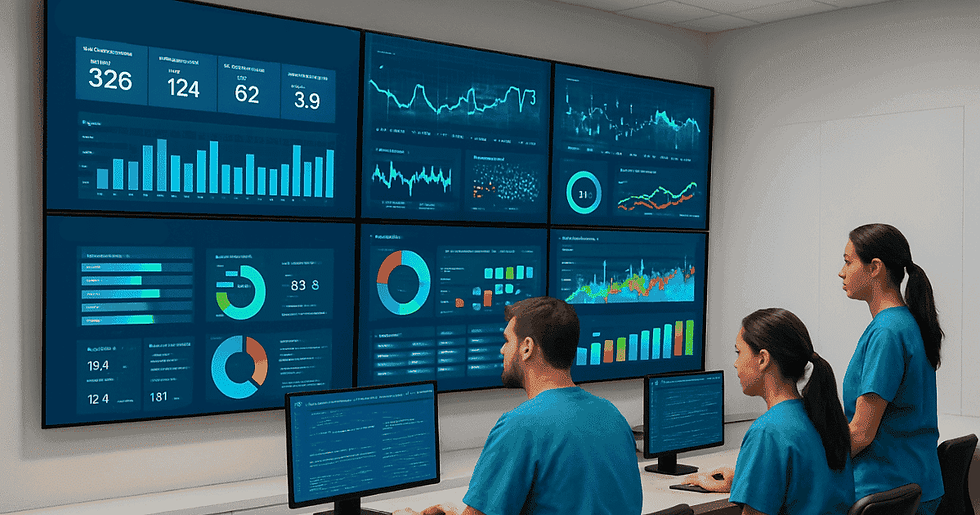
One unexpected tool in successful change management strategies in healthcare organisations is data analytics. When healthcare professionals can see measurable improvements from new systems, resistance transforms into advocacy.

In sterile services implementations, real-time analytics demonstrate:
Efficiency Gains
Processing time reductions, capacity utilisation improvements, and workflow optimisation that staff can observe directly.
Quality Improvements
Error reduction, compliance enhancement, and traceability improvements that validate the value of change efforts.
Individual Impact
Personal productivity metrics that help staff understand how new systems improve their specific work rather than just departmental statistics.
Predictive Insights
Equipment maintenance needs, capacity planning, and resource optimisation that help staff work more effectively.
GM61's data analytics capabilities transform change management from persuasion-based to evidence-based, making adoption decisions easier for healthcare professionals who rely on data-driven decision making in their clinical work.
The Future of Healthcare Change Management
As healthcare becomes increasingly digital, organisations that master change management will distinguish themselves from those that simply accumulate unused technology systems.
The future belongs to healthcare organisations that understand change management as a core competency, not an afterthought to technology acquisition. This means:
Change-Ready Culture
Building organisational capacity for continuous adaptation rather than treating each system implementation as a discrete project.
Staff Empowerment
Involving healthcare professionals in technology selection and customisation rather than imposing external decisions on clinical workflows.
Continuous Improvement
Using data analytics and feedback systems to optimise both technology systems and change management approaches over time.
Strategic Integration
Connecting individual system changes to broader organisational goals and patient care improvements.

For healthcare leaders ready to transform their technology investments into genuine operational improvements, the question isn't whether to implement new systems, it's whether to partner with change management experts who understand that successful healthcare technology adoption requires specialised expertise in both technical implementation and human psychology.
GM61's proven track record in healthcare change management, from complex sterile services implementations to hospital-wide data analytics projects, positions us as the trusted partner for healthcare organisations ready to achieve genuine transformation rather than merely accumulating unused technology capabilities.
Ready to discuss how proven change management strategies can ensure your next healthcare technology implementation actually delivers its promised benefits? Contact GM61 to explore tailored approaches that transform resistance into advocacy and technology investments into operational excellence.